Contrarian Betting Looks Smart Until It Isn't: The Real Truth About Fading the Public

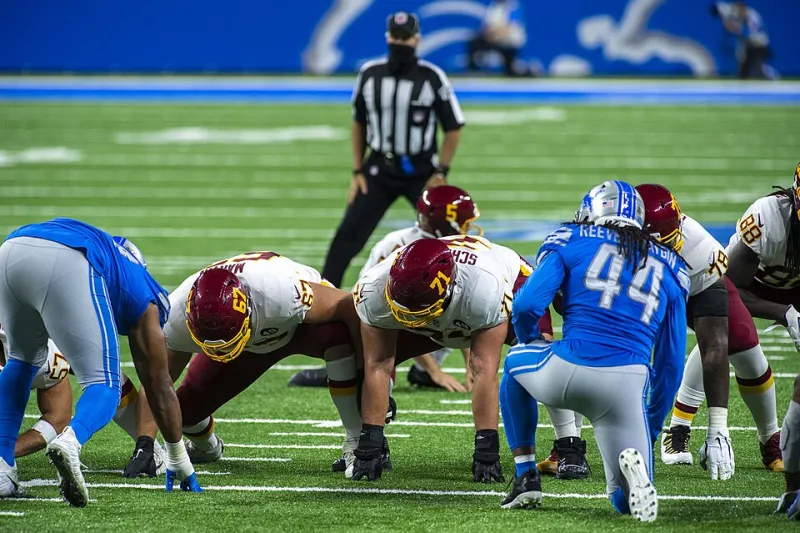
Photo: Zakir Mirshanov, CC BY-SA 4.0, via Wikimedia Commons
There's a certain satisfaction that comes with fading the public. You're not one of those casual bettors dumping money on the Cowboys or the Lakers because your group chat said so. You've done your homework. You know how the sportsbooks operate. You're the sharp in the room.
Except — are you?
Contrarian betting has become one of the most romanticized strategies in the sports gambling world, and for good reason. The narrative is clean: the public bets with their hearts, the books shade lines to exploit that bias, and savvy bettors cash in by going the other direction. It's a compelling story. It's also only half true.
Where the Contrarian Idea Actually Comes From
The foundation of fade-the-public betting isn't totally made up. There's real math behind it. Recreational bettors do tend to overload on popular teams, primetime games, and heavy favorites. Sportsbooks — especially in the pre-sharp-action window — will sometimes shade their lines a half-point or full point to account for that lopsided public money.
Studies over the years have shown that betting against teams receiving 70% or more of public spread tickets does produce a modest edge in certain contexts. Key word: modest. And key phrase: certain contexts.
The problem is that most people who adopt a contrarian strategy treat it like a blanket rule. Public on the Chiefs? Fade 'em. Public hammering the over? Pound the under. That kind of mechanical, unthinking approach turns a nuanced edge into a losing habit.
The Trap Nobody Warns You About
Here's where it gets uncomfortable. Sportsbooks know that sophisticated bettors love to fade the public. They've known it for years. And some sharp-money shops have gotten very good at using that tendency against you.
Consider this scenario: a marquee Saturday college football game has 75% of public tickets on the home favorite. You see that number, feel good about your contrarian play on the underdog, and put in your bet. What you might not realize is that sharp syndicates — the guys with seven-figure bankrolls and algorithmic models — are also on the favorite. The line hasn't moved toward the underdog despite the public money because sharp action is holding it in place, or even pushing it the other direction.
You just faded the public and walked straight into a sharp trap.
This is what betting analysts sometimes call a "reverse line movement" situation — when the line moves opposite to where the public money is going. That usually signals sharp action on the other side. But a casual contrarian bettor, just looking at ticket percentages, might misread the whole picture.
When Fading Actually Works
To be clear, there are genuine spots where going against the grain pays off. The key is understanding why the public is wrong in a specific case, not just that they're wrong in general.
Inflated primetime narratives. When ESPN has been running a team's highlight package all week and casual bettors are riding the hype, lines can get bloated. Think a team coming off a blowout win getting three extra points of public love that the underlying numbers don't support. That's a real fade opportunity.
Overreaction to recent results. The public has a short memory and a heavy recency bias. A team that got stomped last week draws underdog money even when the matchup this week is completely different. Bettors who dig into schedule context, opponent quality, and situational angles can find real value fading that emotional overcorrection.
Key number manipulation. If a line moves from -3 to -3.5 despite 80% of public money coming in on the favorite, that's a red flag. The book is either shading for juice or sharp money came in on the dog. Either way, the contrarian play has some structural support beyond just "the public likes this team."
The common thread in all of these? There's a reason behind the fade, not just a percentage on a ticket split screen.
Sharp vs. Sharp: The Situation That Breaks the Model Entirely
One thing contrarian theory doesn't handle well is games where sharp money is on both sides — what the industry calls a "sharp vs. sharp" matchup. These games happen more than you'd think, especially in NFL and college football, where multiple respected syndicates have conflicting models.
In those situations, ticket percentages and line movement become almost meaningless as signals. The public might be 65% on one side, sharp money is split, and the line barely moves. A contrarian bettor looking at that ticket split and fading the public might be right, or might be wrong, and the betting percentages give you zero useful information either way.
In these spots, the best bettors — the ones who actually beat the book over meaningful sample sizes — fall back on their own analysis. They look at the number itself. Is this line fair? Is there value here based on what I know about these teams? The contrarian angle becomes irrelevant.
The Psychological Trap Is the Real Danger
Beyond the strategic errors, there's a psychological cost to contrarian betting that doesn't get talked about enough. When you lose a fade, it's very easy to rationalize it. "The public got lucky." "The books got bailed out." "I was right, the result was wrong."
That kind of thinking is corrosive to your bankroll. It lets you avoid accountability for bad process because you've already framed your approach as inherently smarter than everyone else's. You can lose six straight fades and still feel like you're playing the right game.
At 33Bet Sports, we talk a lot about process over results — but that only works if your process is actually sound. Fading the public because it sounds sophisticated is not a sound process. It's just a different flavor of lazy betting.
So Should You Ever Fade the Public?
Absolutely. But do it with your eyes open.
Use ticket splits as one data point among many, not as your entire strategy. Look for line movement that confirms or contradicts what the public numbers suggest. Build a case for your bet that stands on its own merits — and if the contrarian angle supports that case, great. If it's the only case you've got, that's a problem.
The sharpest bettors aren't dogmatic contrarians or public followers. They're opportunists. Sometimes the public is right. Sometimes the sharp money is wrong. The best plays are the ones where your own analysis, the line value, and the market signals all point in the same direction.
Fading the public can be a real edge. But it's a scalpel, not a sledgehammer. Use it like one.