The Sportsbook Trap Door: How Books Bleed Money on Purpose to Clean You Out Later
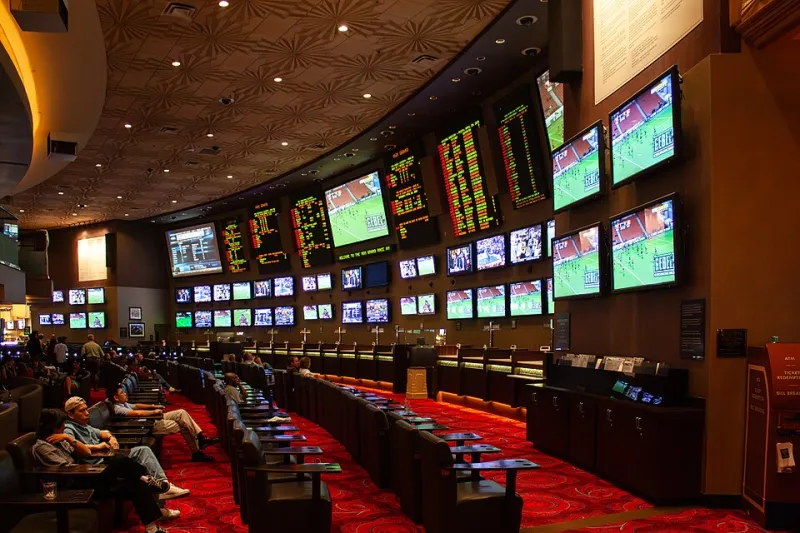
Photo: Chad Davis, CC BY 2.0, via Wikimedia Commons
Everybody loves finding a soft line. You're scanning the board, you notice a number that looks a full point off from where the market should be, and suddenly you feel like you've cracked the code. Sharp bettors live for that feeling. The problem? Sometimes the sportsbook already knows the line looks soft — and they left it that way on purpose.
This isn't a conspiracy theory. It's a business model. And once you understand how it works, you'll never look at an inviting number the same way again.
Why a Sportsbook Would Ever Want to Lose
Let's start with the basic assumption most bettors carry around: sportsbooks want to win every bet. That's wrong — or at least, it's incomplete. Books don't care about winning individual bets. They care about managing liability across a portfolio of outcomes and generating consistent long-term margin. Those are two very different things.
Modern sportsbooks operate more like sophisticated financial institutions than the Vegas cashiers of the 1980s. They're running correlated risk models across thousands of simultaneous markets. In that environment, taking a calculated loss on Market A can directly reduce catastrophic exposure on Markets B, C, and D. It's called liability management, and it's why the line you think you're exploiting might actually be bait.
Here's a simplified example. Say a major college basketball game has enormous public action on the favorite. The book is already overexposed on that side. Rather than move the line so aggressively that they tip off sharp bettors to the imbalance, they might shade a related prop or a first-half spread just slightly off-market — enough to attract sharp money on the underdog side of the correlated outcome. The book absorbs a small loss on that prop. But in doing so, they hedge their bigger liability on the main game without ever having to blow up the primary spread.
They just used your sharp instincts against you.
The Loss-Leader Line: Retail's Oldest Trick, Now in Your Sportsbook
If you've ever walked into a grocery store for the sale item on the front page of the circular and walked out with $80 worth of stuff you didn't plan to buy, you've already been a victim of loss-leader pricing. Retailers intentionally sell certain items below cost to drive traffic and increase overall basket size. Sportsbooks have quietly adopted the same psychology.
A book might offer genuinely sharp odds on a high-profile NFL game — the one that's getting wall-to-wall media coverage — knowing that the volume of recreational bettors that event attracts will more than offset the margin they're giving up to sharp players. The soft line on the marquee game is the loss leader. The juice they're collecting on the seventeen other games that same slate of casual bettors sprinkles money across? That's the profit center.
This is especially common in markets like same-game parlays, player props, and live betting, where the book has structural advantages that dwarf whatever they're giving away on the opening spread. They can afford to look generous on the number you're studying, because they know statistically that the same account placing that bet is also throwing money at a three-leg parlay that's printing money for the house.
What 'Market Positioning' Actually Means for Your Bankroll
Beyond single-game tactics, sportsbooks play a longer strategic game around market positioning. Certain books deliberately cultivate reputations as sharp-friendly destinations. They'll accept higher limits, move lines quickly, and occasionally offer numbers that look almost too good. The goal isn't charity — it's data.
When sharp bettors move on a line at a sharp-friendly book, that movement becomes a signal to the rest of the market. The book is essentially crowdsourcing its own line setting from the sharpest minds in the industry, then adjusting their positions accordingly before recreational money floods in. The sharp bettor thinks they found value. The book thinks they just got a free real-time market update.
Some books have even been transparent about this in industry discussions. They'd rather be wrong on a bet and right about the market direction than be right on the bet and wrong about where the smart money is going. One bet is a transaction. The market signal is infrastructure.
How to Spot a Trap Line Without Becoming Paranoid
None of this means you should stop hunting for value or assume every good number is a setup. That kind of paranoia will make you a worse bettor, not a better one. The goal is calibrated skepticism — asking a second question before you pull the trigger on what looks like easy money.
A few things worth asking when a line looks unusually inviting:
Is this market heavily correlated with something else on the board? If the soft line is on a prop or a half-game spread that directly ties into a market with enormous public action, the book may be using it as a hedge vehicle.
What's the limit on this bet? Books that are intentionally attracting sharp action on a loss-leader line will often cap it. If the limit is unusually low for the market type, that's a signal they want some sharp money, but not too much.
Has this book moved other lines in the same game aggressively? If the main spread has been hammered and the total looks frozen, or vice versa, the book may be managing correlated liability in a way that's creating artificial softness in one market to stabilize another.
Are you being driven here by hype? If the soft line is on the game everyone's talking about, ask yourself whether the book has a structural incentive to look sharp-friendly on the most visible number of the week.
The Bigger Picture Sharp Bettors Keep Missing
The sharpest bettors in the US market are extraordinarily good at one thing: finding mispriced numbers relative to the true probability of an outcome. What many of them underestimate is that sportsbooks are increasingly good at something different — finding mispriced bettors relative to the true probability of long-term extraction.
The book doesn't just price the game. They price you. Your betting history, your tendencies, your preferred markets — all of it feeds into how they manage the liability you represent. A line that looks soft to you might look perfectly calibrated to them, because they already know how you're likely to react to it.
That doesn't mean the house always wins. Disciplined, selective bettors with genuine analytical edges do beat books over meaningful sample sizes. But the ones who beat books consistently aren't just finding value — they're thinking about why the value appears to be there, and whether the answer is actually in their favor.
At 33Bet Sports, we're not here to scare you off the board. We're here to make sure the edge you think you have is real, and not a door someone else left open for a reason.